Agentic AI + Full-Stack: The Spike Freshers Missed This Week
Capgemini, Infosys, and Wipro all hired AI engineers this week—but job descriptions now ask for "Agentic AI" skills most freshers haven't heard of. Here's what changed and what to learn next.
Capgemini, Infosys, and Wipro all hired AI engineers in India this week. But if you looked at the job descriptions, you saw something new: "Agentic AI Developer," "AI Software Engineer (Agentic AI & MCP Systems)," and "GenAI-flavored full-stack roles." Most freshers I talk to have never heard the term "Agentic AI." That's the gap we're closing today.
What spiked this week
Three hiring signals stood out:
1. Agentic AI roles grew +260% year-on-year, making it the fastest-growing AI job category in India. AI Software Engineer roles focused on Agentic AI and MCP (Model Context Protocol) systems grew +225%. If you're still positioning yourself as a "machine learning intern," you're already behind the market language.
2. Full-stack + AI understanding is now baseline for India's GCC (Global Capability Center) hiring. Companies are looking for people with skills in AI, data, cybersecurity, cloud, software, and product development—especially full-stack + AI understanding. Not full-stack *or* AI. Full-stack *and* AI.
3. Google posted [Software Engineer II and III, Full Stack roles this week](https://www.google.com/about/careers/applications/jobs/results/89363826046051014-software-engineer-ii-full-stack) asking for "AI/ML GenAI" experience, 1–2 years of full-stack development across Java, Python, Golang, or C++ codebases, and front-end work. These aren't niche research roles. They're product engineering roles that assume you can build *and* integrate GenAI features.
What "Agentic AI" actually means (and why it matters for freshers)
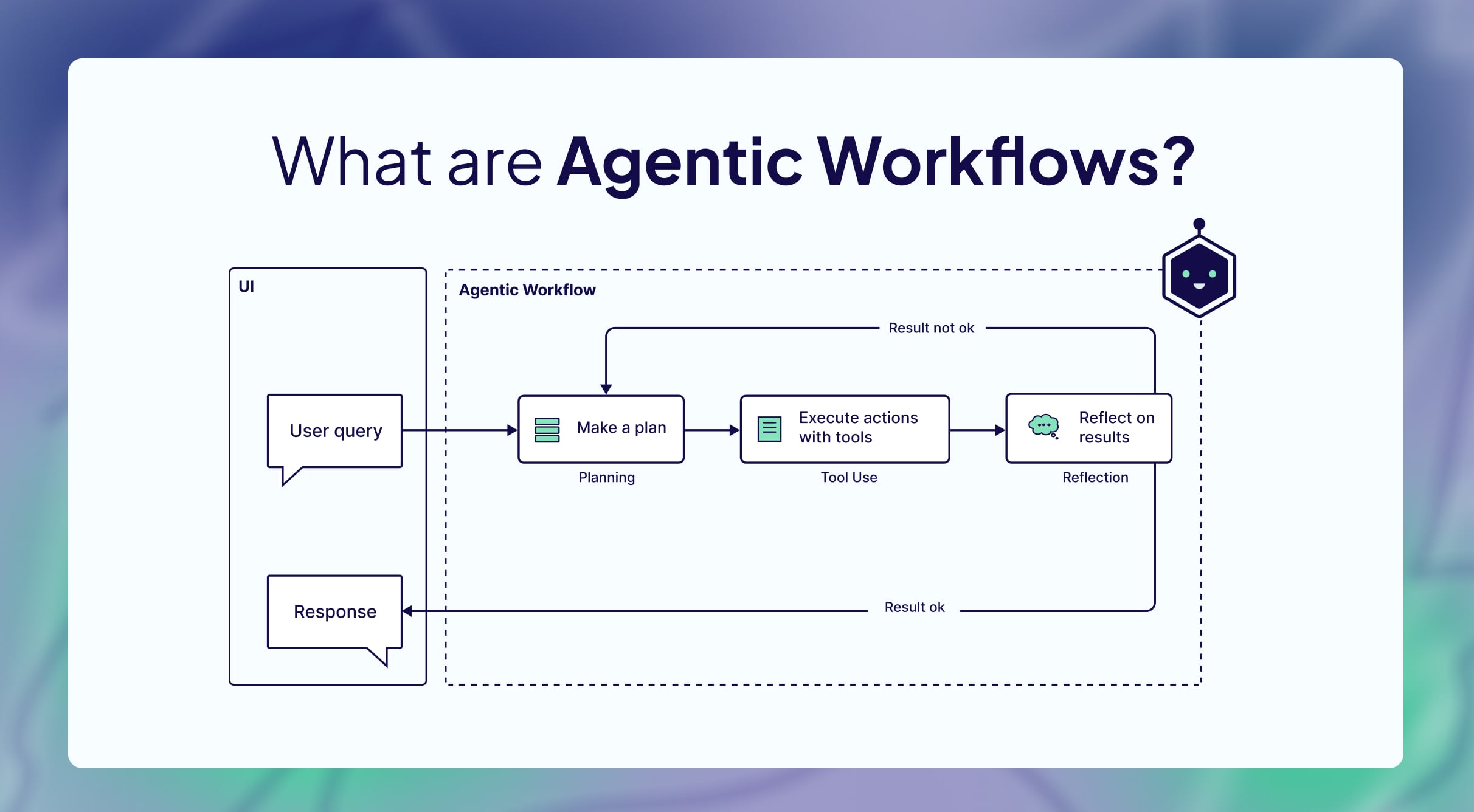
Agentic AI refers to systems where an LLM doesn't just answer questions—it takes actions. Think: an AI that reads your Jira tickets, writes code, opens a pull request, runs tests, and asks you to review. Or an AI that reads documentation, generates SQL queries, checks the results, and updates a dashboard.
It's the difference between a chatbot that says "Here's some Python code" and a system that writes the code, checks it into Git, and pings your Slack when the CI pipeline passes.
Why this matters for freshers: companies don't want you to *use* ChatGPT to write code. They want you to *build systems* that use LLMs to automate workflows. That means understanding:
- How to call an LLM API (OpenAI, Anthropic, local models like Qwen)
- How to give it tools (functions it can call: file read/write, database queries, API calls)
- How to handle multi-step reasoning (the AI decides what to do next based on results)
- How to debug when the AI hallucinates or picks the wrong tool
This week, a developer gave Qwen 3.8 27B a reverse-engineering job and it finished in 30 minutes. That's not a research demo. That's a preview of what your first manager will expect you to prototype.
Why your GenAI demos feel weaker than they should
I reviewed five fresher portfolios this week. All had a "ChatGPT clone" or "PDF Q&A with RAG" project. None got callbacks. Here's why:
Your local LLM feels dumber than it is because of three fixable mistakes:
- Wrong sampling settings. Temperature, top-p, and repetition penalty matter more than model size. Freshers pick defaults and wonder why responses are repetitive.
- Bad prompts passed directly from user input. No system message, no structured output format, no example few-shots.
- No evaluation loop. You don't log which queries fail, you don't A/B test prompts, you don't measure latency or cost per call.
One sharp practice that separates juniors from hires: using an `agent.md` file to improve LLM-assisted code quality. Instead of pasting raw requirements into ChatGPT, you maintain a markdown file in your repo that tells the AI your stack, your style rules, your test requirements, and your edge cases. Then every prompt references that file. Your AI pair-programmer gets smarter every week because *you* are managing its context.
The fresher mistake I saw three times this week
Three people messaged me: "I learned React and Node. Why am I not getting interviews?"
Because the job posts this week asked for:
- AI & Machine Learning (GenAI, LLM integration, MLOps)
- Cloud Computing (AWS, Azure, GCP, Kubernetes, Docker)
- Full-stack development *across back-end* such as Java, Python, Golang, or C++, and front-end (from the Google SWE II posting)
You can't position as "MERN stack developer" anymore. The market wants:
- One back-end language (Python or Java, pick one, go deep)
- One front-end framework (React is fine, just ship something real)
- One LLM integration (call an API, handle streaming responses, manage context window, log costs)
- One deployment flow (Docker + a cloud platform, even if it's just a free-tier EC2 instance)
That's the 2026 full-stack checklist.
What to watch before you apply
Some companies are still clearing 2025 backlog. Cognizant candidates selected in early 2026 have been given tentative joining windows of February–May 2027. Wipro candidates from 2025 hiring face similar delays. LTIMindtree says freshers will be onboarded in batches.
Meanwhile, Infosys is set to recruit approximately 20,000 college graduates in 2025, and India's IT industry added 1.4 lakh employees to reach 5.9 lakh according to Nasscom data.
Translation: mass hiring is happening, but offers are slow to convert to joining dates. If you're a fresher, don't wait for one company. Apply widely, and make sure your profile shows the skills that spiked *this quarter*—not last year's curriculum.
This week, do this
Here's your action checklist before next Sunday:
- Pick one Agentic AI tutorial. Build a system where an LLM calls a function (e.g., reads a CSV, queries a database, hits a REST API) and returns a result. Deploy it. Put the repo link in your resume.
- Add an `agent.md` file to your best project. Describe your stack, conventions, and known issues. Reference it the next time you use ChatGPT or Cursor.
- Audit your resume for 2026 keywords. Does it say "GenAI," "LLM integration," "Docker," "cloud deployment"? If not, your ATS score is low.
- Check if your target company is clearing backlog or actively onboarding. Ask on LinkedIn, check Glassdoor, or message someone who joined recently. Don't wait six months for an offer letter that says "tentative joining: 2027."
If you're serious about becoming job-ready before your batchmates, the Pritam Mentor waitlist is open. We build real Agentic AI + Full-Stack projects in 1-on-1 sessions—no recorded lectures, no theory dumps. Just you, me, and code that gets you hired.