What Changed This Week in Tech: Next.js 16.3, LangGraph 1.4.9, and Why Your Portfolio Just Got Easier
Next.js patched critical security issues, LangGraph hit 1.4.9 with better orchestration, and the GenAI stack is solidifying. Here's what portfolio-building freshers should care about.
Three releases dropped this week that directly affect the stack you should be learning right now. Next.js 16.3 closed a security hole, LangGraph reached 1.4.9 with patches published just hours ago, and the LangChain ecosystem shipped Fireworks integration updates. If you're a fresher building projects, these aren't just version bumps—they're signals about what companies actually deploy.
The Stack Is Consolidating Around GenAI Agents
Look at what companies use in production. LangGraph is deployed at Replit, Uber, LinkedIn, and GitLab. Not startups. Not side projects. Companies hiring freshers across India, including Pune.
The 2026 agent stack looks like this according to recent comparisons: LLM (Claude), memory (mem0), framework (LangGraph), RAG (qdrant), workflow (n8n), backend (FastAPI), frontend (Next.js), deploy (Vercel). This isn't theory—this exact stack is being recommended as the production standard.
Why does this matter for your portfolio? Because recruiters don't care about toy apps. They care about whether you can work in the stack their team already uses.
What Actually Shipped This Week
### Next.js 16.3.0
This release patched CVE-2025-13465, a security vulnerability in vendored lodash. They updated to 4.17.23, fixed invalid HTML responses for route-level RSC requests in deployment adapters, and normalized encoded dynamic placeholders in app routes.
Why you care: If you deployed a Next.js project in the past month, update it this week. Security patches are table stakes. In interviews, being able to say "I monitor releases and patch CVEs within 72 hours" separates you from freshers who deploy once and forget.
### LangGraph 1.4.9
Published three hours ago, this patch includes fixes for the LangGraph API that improve state management in agentic workflows. The @langchain/langgraph-api@1.4.4 release stopped wiping graph recursion state incorrectly.
Why you care: LangGraph is now described as a "low-level orchestration framework" for stateful agents. If you're building a portfolio project with AI agents—a chatbot that remembers context, a document assistant, a research tool—LangGraph handles the orchestration layer. Freshers who understand state management in agent systems have an edge.
### LangChain Fireworks Integration
@langchain/fireworks@0.2.6 added LangSmith Gateway environment configuration to OpenAI-compatible models. Small patch, but signals tighter integration between LangChain tooling and model providers.
Why you care: Companies are standardizing on LangChain-compatible patterns. If your portfolio uses raw OpenAI API calls instead of the LangChain abstraction layer, you're one migration away from what production teams actually maintain.
Why Freshers Should Build With LangGraph Now
A DeepLearning.AI course graduate wrote this week: "I recently completed the LangGraph course from DeepLearning.AI, and it genuinely changed the way I think about building AI applications."
What changed? LangGraph forces you to think in graphs and state. Not sequential chains. Not one-shot prompts. Stateful workflows where agents can loop, branch, wait for human approval, and resume.
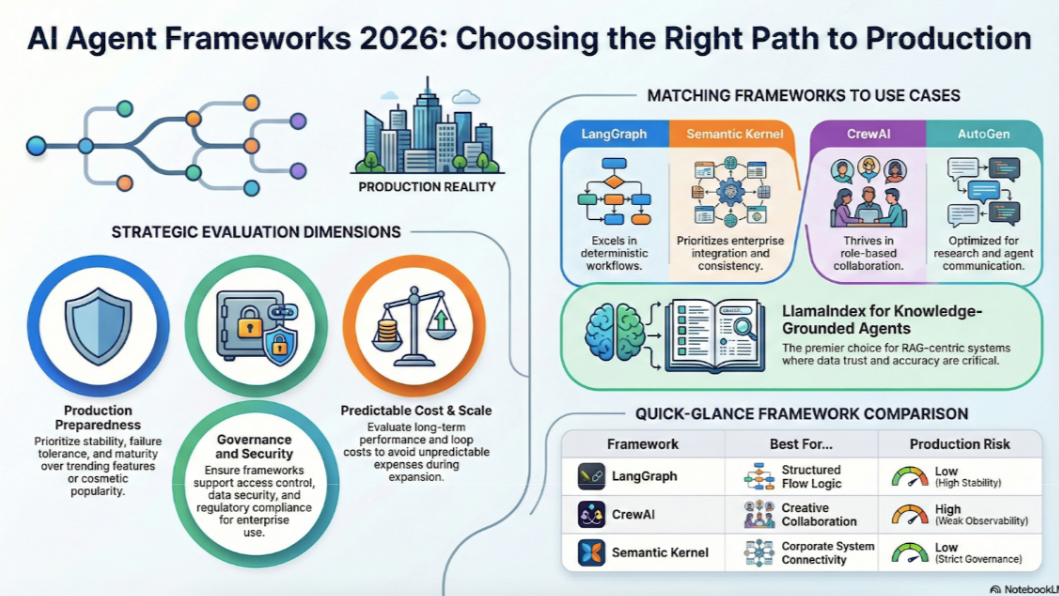
A recent framework comparison puts it clearly: five frameworks matter for production in 2026, and LangGraph is the enterprise default. When you need auditability, human-in-the-loop approval, or durable state, LangGraph wins.
There's also a hands-on ACM tutorial on "Building Agentic AI Systems with LangGraph" that covers designing and orchestrating stateful workflows. It's built on top of LangChain, so if you know one, learning the other is faster.
The Practical Stack for a Portfolio Project This Month
You don't need 20 tools. You need one full-stack GenAI project with these layers:
- Frontend: Next.js 16.3+ (patch CVEs, use App Router, deploy to Vercel)
- Backend: FastAPI (Python) or Next.js API routes (TypeScript)
- Agent Framework: LangGraph for orchestration, state, and multi-step flows
- LLM: Claude or GPT-4 via LangChain abstractions
- Memory/State: mem0 or Postgres with pgvector for RAG
- Deploy: Vercel (frontend) + Railway/Render (backend)
Why this stack? Because it matches what production teams recommend and what GitHub curated lists call the 2026 mainstream agent stack.
Companies hiring freshers want to see:
- You can integrate LLMs safely (prompt injection awareness, rate limits, error handling)
- You understand state management in async workflows
- You've deployed something real (not localhost screenshots)
- You monitor dependencies and patch security issues
What's Happening in the Fresher Job Market
The shift is clear: GenAI roles aren't "ML engineer" postings anymore. They're full-stack roles with GenAI tooling. Companies want engineers who can build UIs in Next.js, orchestrate agents in LangGraph, and deploy on Vercel—all in one hire.
Freshers across India, including those in Pune's college and hiring scene, are competing on portfolio quality now. The baseline isn't "I know React." It's "I shipped a GenAI project that solves a real problem, handles state, and runs in production."
Frameworks like CopilotKit now support LangGraph JS and LangGraph Platform for agentic copilots. That's the direction: agents embedded in user-facing apps, not academic notebooks.
If you're still building todo apps, you're six months behind.
This Week, Do This
Pick one action from this list and finish it by Sunday:
- Upgrade your Next.js project to 16.3.0 and confirm the CVE patch is applied
- Start the DeepLearning.AI LangGraph course (free, practical, changes how you think about agents)
- Rebuild one portfolio project backend using LangGraph—even a simple chatbot with memory
- Deploy something to Vercel with a custom domain and live demo link (not localhost)
- Document your project README with architecture diagram, stack explanation, and why you chose LangGraph
The market doesn't wait for you to feel ready. It rewards freshers who ship, update, and move fast.
If you want 1-on-1 help turning these updates into a portfolio that gets interviews, join the Pritam Mentor waitlist: https://pritamkamble.com/#apply